Wine and food pairing is often seen as a mysterious art, but honestly, it doesn’t have to be that complicated. Many people stress over finding the “perfect” match for every dish, but more often than not, if you’re in the right range, a surprising number of combinations just work. Of course, you can get it wrong, we’ve all tried a pairing that just didn’t make sense, but the real key to enjoyable wine and food pairing starts with direction, not perfection.
For me, the first and most important principle is intensity. How strong or rich is your dish? And how strong or rich is your wine? You generally don’t want one to overpower the other. Ideally, the wine should support the dish rather than dominate it. In fact, that’s why I often prefer a slightly fresher, less intense wine that highlights the food, rather than a bold wine that overwhelms it. You don’t need a new bottle for every course, one well-chosen wine can accompany two or three dishes, as long as the intensity aligns reasonably well. The ultimate pairing, when a dish and a wine elevate each other, is magical, every sommelier dreams of that moment. However, it’s rare, and it’s found not in theory but through tasting, tasting, and more tasting. So start with intensity, identify overlaps between flavors in the dish and the wine, and sometimes, you stumble upon something extraordinary.
Beginners often forget the basics, jumping straight to “exciting” wines without considering the dish. For example, I remember a rich, creamy aubergine dish paired with a delicate, fresh wine, elegant on its own, but completely lost its flavour with that dish. That’s a classic wine and food pairing mistake. On the other hand, some unexpected combinations can create real wow moments. At Vermeer in Amsterdam, we served a small ravioli filled with pickled kohlrabi in a concentrated sweet carrot broth. A medium sherry paired with it beautifully, the wine’s complexity and subtle sweetness matched the carrot’s natural sweetness and the intense pickled flavours of the kohlrabi. One sip and people’s eyes would light up: this is it.
Cheese pairings are another example of where thoughtful pairings really shine. A Cheese platter isn’t just about pairing it with a bold red wine. Fresh goat cheese, a creamy brie, aged cheese or blue cheese, they all call for different styles of wine. Light, acidic and optionally sparkling wines work wonderful with light, softer cheeses, providing a refreshing contrast to their creaminess. Meanwhile, heavier fortified wines, like well-aged port or oxidized wines from southern France, often with some residual sugar pair beautifully with heavier cheeses like a strong blue cheese, enhancing their intensity without overwhelming them. As a result, these pairings, often underappreciated, are some of the most rewarding to create and share.
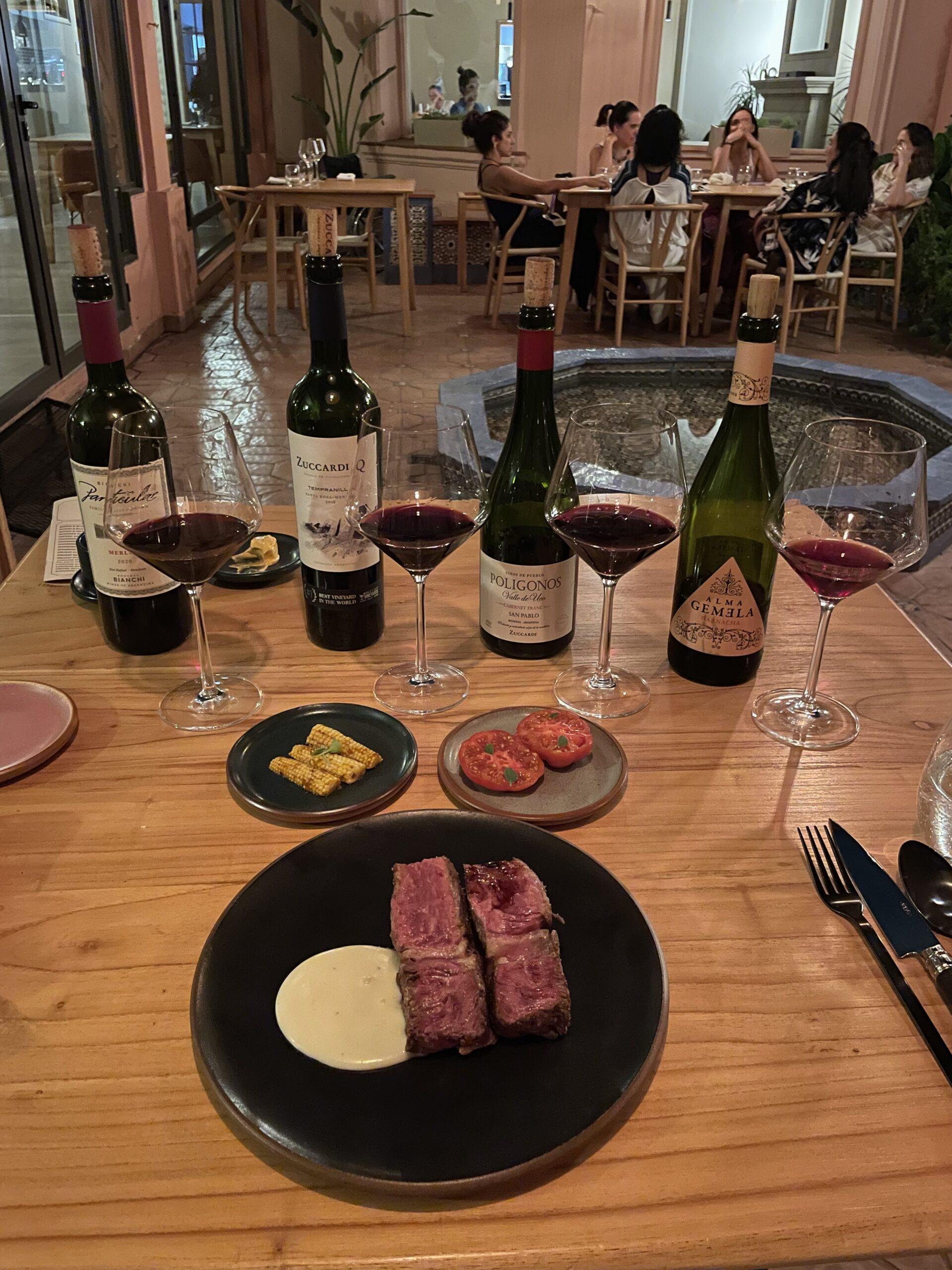
The joy of wine tasting and wine and food pairing for me comes in the process itself; experimenting with two, three, or four wines with a single dish, adjusting, discarding, and finally finding the wine that truly brings the dish to life. The journey, the experimentation, and even the mistakes are what make it so fun. Ultimately, remember, whether it’s white, red, sparkling or fortified, the principle is the same: start with intensity, find common threads, and don’t be afraid to taste your way to something extraordinary. That’s the essence of wine and food pairing and once you understand it, it’s both accessible and incredibly rewarding.