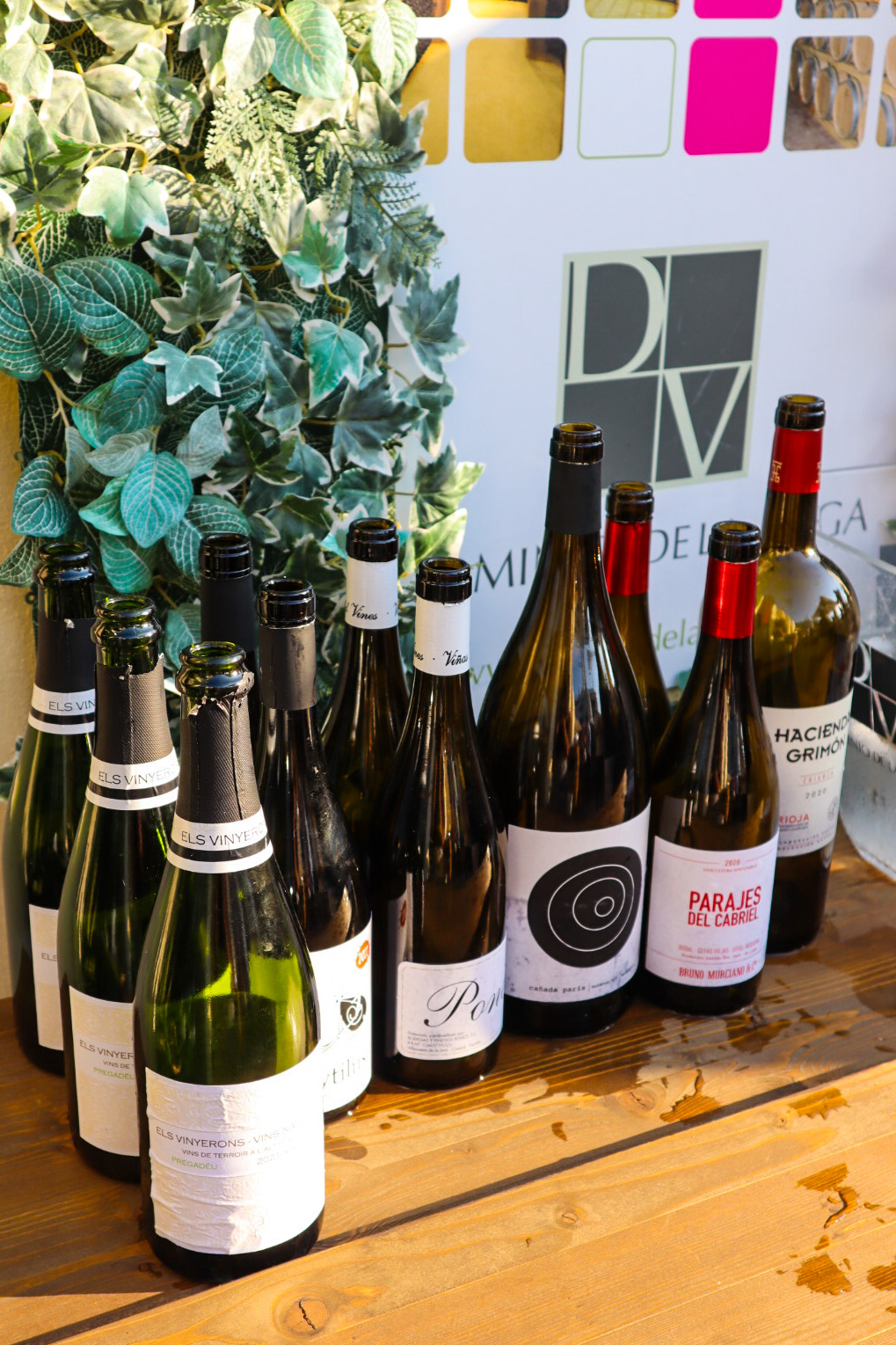
During my wine tastings in Valencia, often people look at the bottles but fail to understand what everything on the label says about the wine, so how do you read Spanish wine labels?
At first, Spanish wine labels can look confusing, but there is a system behind it that when you understand it, makes everything a lot easier. Around the world, all wine labels are required to show key information such as the alcohol percentage, bottle volume, and country of origin. That gives you the basics straight away.
The confusion usually starts with language and structure. During my wine tastings in Valencia, many guests do not speak Spanish, so certain terms can feel unclear. On top of that, many Spanish wines use native grape varieties that people are less familiar with, often linked to a specific region. It is not always obvious whether you are looking at the grape variety, the region, or the name of the wine. This is exactly where understanding how to read Spanish wine labels makes a big difference.
The classification system is key, but can also seem complicated at first. In Spain, quality levels generally move from simpler table wines to regional wines, up to DO and the highest category, DOCa. After the table and regional wine Italy uses DOC or DOCG, and France uses AOP. The system is regulated by the EU, so that framework is the same for all wine-producing countries within the EU. As you move higher in the system, the production rules become stricter and more information needs to appear on the label. This already gives you a useful first idea of origin, style, and minimum quality standards before tasting.

Once you start to understand how to read Spanish wine labels, the first thing I always look at is the region. DO stands for Denominación de Origen, which means the wine comes from an officially recognised region with specific production rules. These rules often cover things like grape varieties, yields, ageing, and winemaking methods. In other words, DO tells you something about the identity and style of wines from that area.
DOCa is a stricter category, currently used only in Rioja and Priorat. This does not automatically mean every wine from those regions is better than every other Spanish wine. It simply means the minimum standard is generally higher and the regulations are stricter.
During my wine tastings in Valencia, I often explain this in more detail, because once people understand how to read Spanish wine labels, they realise that the region is often one of the most important clues on the bottle, sometimes even more important than the grape variety.
Something else you often read on Spanish wine labels is the ageing classification. Crianza, Reserva, and Gran Reserva indicate how long a wine has been aged before release. Crianza is a minimum of two years, Reserva at least three, and Gran Reserva at least five. It sounds impressive, but older is not always better. Some wines are simply meant to be consumed young, fresh, and vibrant, and not every wine benefits from longer ageing.
But be careful, often these terms are also used for wines from other parts of the world, mainly South America. But here it doesn’t have any legal meaning.
In Europe, the region often says more about the style of wine than the grape variety, whereas outside Europe it is often the other way around. This is also because the vast majority of “New World wines” are produced from international grape varieties like Cabernet Sauvignon, Pinot Noir, Chardonnay, or Sauvignon Blanc. In Europe, it is more common that regions produce a style of wine they have made for years from autochthonous grape varieties. Outside Europe, winemaking is in general more commercial, and producers often want to make recognisable wines for their customers. That often makes New World wines feel more straightforward and customer-friendly at first glance.
Personally, I always look for freshness, balance, and a good level of acidity. That is why I often enjoy wines from cooler climates like Bierzo, Rias Baixas, and Ribeira Sacra. But even around Valencia, especially in the higher inland areas, you can find wines with that same energy and freshness.
Sherry is another great example of interesting and complex wine that you can get for great value. Especially in recent years, it has been less popular and very underrated by many people, even though they are incredibly characterful styles of wine to discover. And if you think Spanish wine labels are already a challenge, sherry comes with its own entirely different system and terminology again, but let’s keep that for another day.
So next time you pick up a Spanish wine bottle, slow down a bit. Read the label step by step. Once you understand how to read Spanish wine labels, the system is not there to make things harder, but to help you understand what is in your glass.